
Drought
City of Hickory Drought Status - LIP Stage 2
Mandatory Water Restrictions
Page Updated: October 16, 2026
Communities across the Catawba River Basin, including the City of Hickory, are feeling the serious impacts of ongoing dry weather. Reduced lake storage, decreasing streamflows, and worsening drought conditions have created a situation that requires immediate action. Drought is a naturally occurring part of our climate cycle, and while we can’t control when rainfall returns, we can control how we manage our water resources—together.
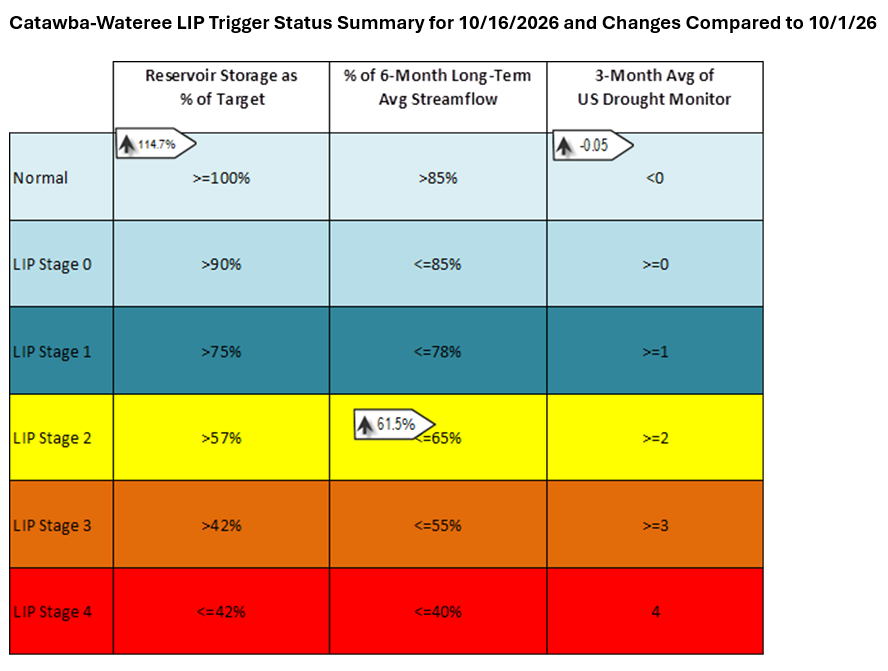
May 1, 2026 - Present: Due to ongoing extremely dry conditions across the region, the Catawba-Wateree Drought Management Advisory Group (CW‑DMAG) declared that the Catawba-Wateree River Basin has entered Stage 2 of the Low Inflow Protocol (LIP). In accordance with the City of Hickory’s Water Shortage Response Plan, Hickory also officially entered Stage 2, triggering mandatory water use restrictions for all customers.
April 16, 2026: The City of Hickory declared a Stage 1 LIP condition in accordance with the City’s Water Shortage Response Plan. This declaration is based on lower lake storage levels, declining streamflows, and current drought conditions resulting from this year’s lack of rainfall. Warmer temperatures have further contributed to water loss through increased evaporation.

LIP Stage
2
Stage 2 LIP: Mandatory Water Restrictions
Stage 2 is the third of five drought stages and marks a shift from voluntary conservation to mandatory restrictions. While this stage does not indicate an emergency, it does require coordinated action from the community to protect the region’s shared water supply.
The goal of Stage 2 is to reduce overall water use by 5-10% to preserve reservoir storage, sustain downstream flow needs, and ensure drinking water availability across the basin until conditions improve.
Your cooperation is essential. By following the required restrictions now, we help safeguard water resources for everyone who relies on this shared system.
Areas Affected
The following partner governmental and nonprofit systems served by the City of Hickory are included in the Stage 2 declaration:
- All customers billed directly by the City of Hickory
- Cities of Conover and Claremont
- Towns of Brookford, Catawba, Long View, and Maiden
- Portions of Alexander and Catawba counties
- Icard Township Water Corporation
Mandatory Water Use Restrictions
All City of Hickory water customers, including partner jurisdictions served by the city, must follow these measures:
Irrigation Restrictions
- Customers may irrigate no more than two days per week.
- Irrigation is prohibited on Monday, Wednesday, and Friday.
- Exceptions remain for newly planted grass, sod, and turfgrass.
Additional Requirements
- No residential vehicle washing.
- Reduce overall water use; schedule discretionary use during early morning or late evening.
- Do not operate ornamental fountains or water features that do not support animal life.
- Do not fill residential swimming pools.
- Do not top off pools on prohibited irrigation days.
Prohibited Activities and Penalties
During Stage 2, the following are not allowed:
- Irrigating on prohibited days
- Operating ornamental water features without animal life
- Filling residential pools
- Topping off pools outside allowed irrigation days
Violations may result in surcharges on your utility bill and potential loss of service:
-
1st violation: $100 (≤1.5” meter) or $200 (≥2” meter)
-
2nd violation: $200 (≤1.5” meter) or $400 (≥2” meter)
-
3rd violation: $300 (≤1.5” meter) or $600 (≥2” meter)
Customers with more than five violations risk loss of irrigation water service.

A Regional Effort to Manage Water Wisely
For more than 20 years, the City of Hickory has worked in partnership with Duke Energy and other major water suppliers along the Catawba River to manage the region’s water through a coordinated approach known as the Low Inflow Protocol (LIP). This shared management plan ensures that every community in the basin is making thoughtful, consistent decisions during times of drought or low water availability.
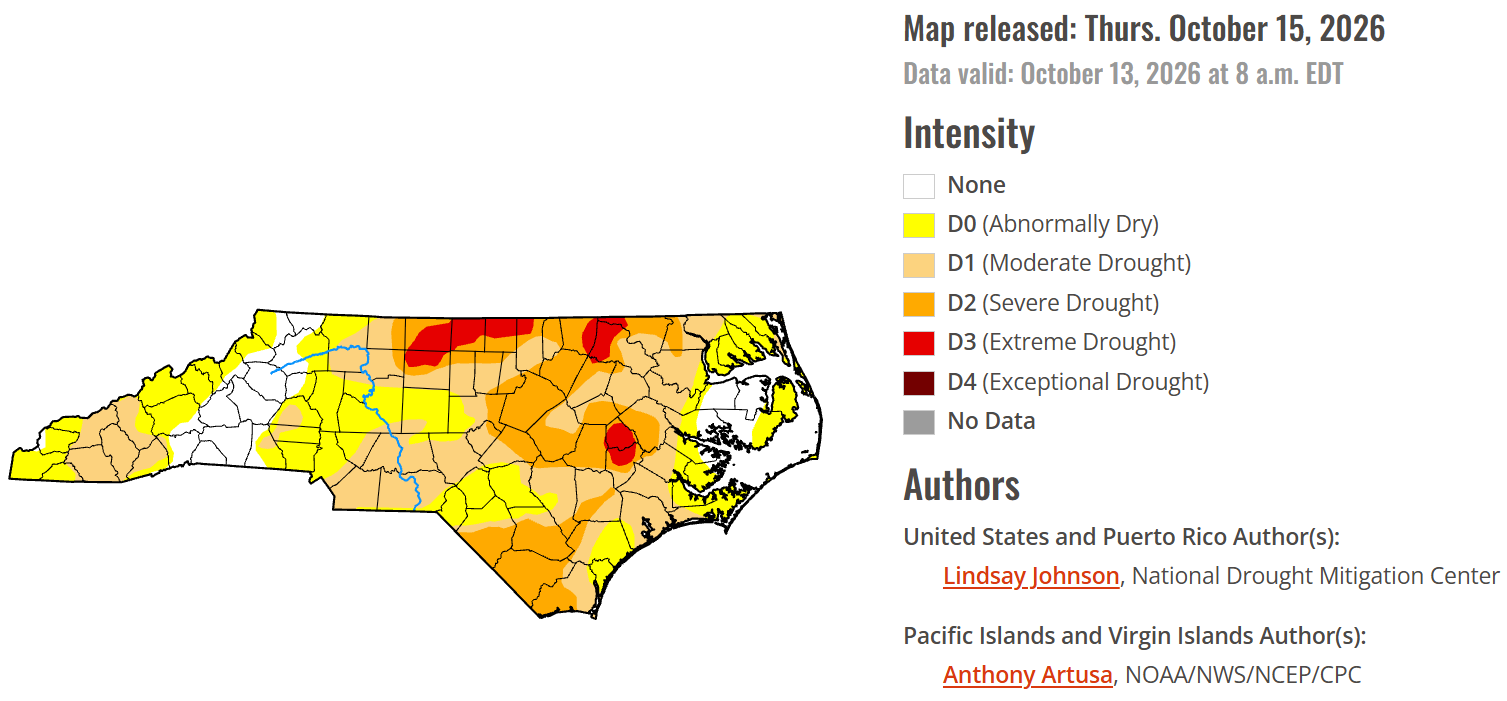
During drought periods, the Catawba‑Wateree Drought Management Advisory Group monthly reviews lake levels, streamflows, groundwater conditions, and other indicators. In the LIP, drought stages are determined by the following three indicators: (1) how much water is in the reservoirs, (2) how much water is flowing into the reservoirs, and (3) the U.S. Drought Monitor, a government site that indicates areas experiencing a drought and the drought’s severity. Duke Energy performs a monthly evaluation of the three indicators and issues a report to all large water users along the Catawba, indicating which stage the basin is in and what actions should be taken to help conserve water. LIP stages are updated on the first and sixteenth days of the month. There are five stages with specific actions detailed for each stage:
- Stage 0 (Watch): Initial monitoring and voluntary conservation.
- Stage 1 (Voluntary Reductions): Goal is 3-5% reduction. Specific watering schedules are encouraged, and car washing should be minimized.
- Stage 2 (Mandatory Reductions): Goal is 5-10% reduction. Discretionary water uses are restricted, and public water suppliers start enforcing measures.
- Stage 3 (Severe): Stricter mandatory measures to achieve higher reductions.
- Stage 4 (Emergency): Highest restriction level, ensuring water is available for essential needs.
Working Together for Our Community
Water conservation is a shared responsibility. It protects our local water supply, supports regional stability, and helps ensure the Catawba River Basin remains a healthy and reliable resource for everyone.
If drought conditions continue, higher level LIP stages may be declared, which require mandatory restrictions on water usage. The City of Hickory will keep you informed as conditions change. To learn more, please contact Public Utilities at 828-323-7427 or check out these online resources :
Catawba-Wateree Water Management Group
FAQs
Drought is a naturally occurring part of our climate cycle. Current drought conditions are the result of prolonged lack of precipitation and water loss through increased evaporation.
Yes. Drinking water remains safe and reliable. These restrictions are focused on conservation and protecting supply.
Conditions have reached a point where action is needed now to protect the region’s shared water supply and maintain reliability.
It depends on conditions. The Catawba-Wateree Drought Management Advisory Group reviews data every other week and updates will be provided as conditions change. LIP stages are updated on the first and sixteenth of the month.
Yes. Hand watering, soaker hoses, and drip irrigation are allowed.
Lawn and landscape irrigation systems may only be run a maximum of two days per week. Irrigation is prohibited on Monday, Wednesday, and Friday. Exceptions remain for newly planted grass, sod, and turfgrass.
No. Vehicle washing at home is not allowed during Stage 2 restrictions. Commercial car washes are permitted.
Per Duke Energy, neighbors who irrigate from the lakes are required to limit watering to two days per week (Tuesday and Saturday only) and to only use the minimum amount necessary to help reduce overall demand.
Annual hydrant flow tests and any non-essential flowing activities have been suspended due to the mandatory water restrictions. However, you may occasionally see hydrants flowing to maintain water quality and ensure emergency readiness. To maintain water quality, crews periodically flush “dead-end” lines to bring in fresh water.
The last time the City of Hickory implemented voluntary water restrictions was in 2023. The last time City of Hickory implemented mandatory water restrictions was in 2009.
Use water efficiently at home and at work. Reduce or pause outdoor watering; check and reset irrigation timers as needed. Identify and repair water leaks (dripping faucets, running toilets) as quickly as possible. Turn off the tap while brushing teeth or shaving. Run full loads of laundry and dishes. Choose shorter showers instead of baths. Follow all guidance on this page.
Violators will see the corresponding fines applied to their next utility bill. The City of Hickory will follow the same non-payment process as it would any other time.